Skip to content
Midland TXPest Control(432) 216-7250

Referral line for Midland, Texas

Roach control in Midland, Texas

Small tan roaches behind the stove are a different problem from a big one in the garage. A call connects you with an independent company that deals with both.

(432) 216-7250

Calls answered: Early morning to late evening

Quick facts: Roaches
Looks likeGerman: 1/2 to 5/8 inch, light brown, two dark stripes behind the head. American: up to 2 inches, reddish brown.
Usually foundGerman: indoors near food and water. American and oriental: mostly outdoors, moving in for food or water.
SeasonGerman roaches breed indoors all year.
Call whenYou see them in daylight, or small ones keep turning up in the kitchen or bathroom.

How to recognize roaches
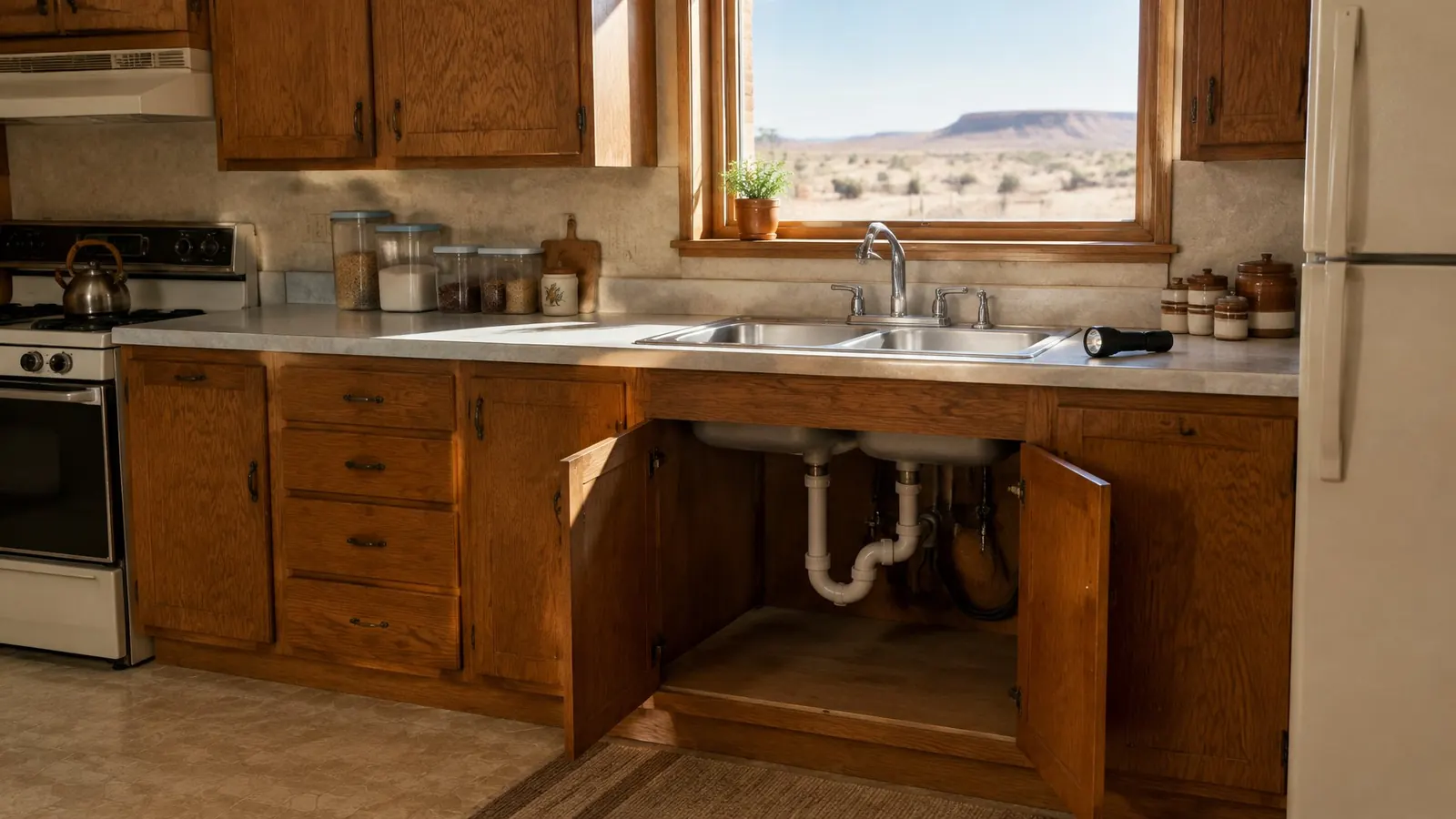
A tidy kitchen with oak cabinets, the cabinet under the sink standing open to show the pipes, and a flashlight on the counter

AgriLife's cockroach guide names four common types in Texas. German cockroaches are 1/2 to 5/8 inch, light brown, with two dark stripes on the plate behind the head. They have wings but don't fly. American cockroaches are the large reddish-brown ones, up to 2 inches, and both sexes can fly. Oriental cockroaches are dark brown to black, about 1 1/4 inches, with short wings. Smokybrown cockroaches are dark and do well in the more humid parts of the state.

It matters which you have. A German roach problem is indoors and grows from inside. An occasional American roach in the garage is usually an outdoor insect that wandered in.

Why they show up here

German cockroaches don't depend on the weather at all. AgriLife says they do not live outdoors in Texas. They come in with groceries or boxes, then spread within a building, from apartment to apartment, and can produce a new generation in about 100 days.

With about 13.5 inches of rain a year, the outdoor kinds have a reason to head for a slow drip, a water heater closet or a floor drain. There's also one to know about in dry country. AgriLife reports that the Turkestan cockroach is better adapted to hot, dry climates and is spreading in Texas, with most reports from El Paso and some from North Texas. No official report for Midland County turned up when this page was written, so treat it as something to ask about rather than expect.

What a visit usually involves

This describes common practice. The company you speak with decides the details.

The company should work out which roach you have and where it hides, then treat those places. For indoor roaches AgriLife describes baits placed close to hiding spots as among the most effective tools, and they work better when other food is put away. Expect a follow-up check, since German roaches can be well established by the time they're noticed.

Ask what you should clear out beforehand, usually the cabinets under the sinks, and how long to stay out if any spray is used.

Keeping them out

  • Fix leaks and wipe up standing water under sinks.
  • Keep food in sealed containers and clean behind the stove and fridge.
  • Caulk gaps around plumbing and along splash guards.
  • Check grocery boxes and cartons before storing them.

When to call

Call if you see roaches in daytime, if small ones keep showing up, or if you share walls with neighbors who have them.

Common questions

Are roaches a sign of a dirty house?

No. They arrive in boxes and groceries and move between units. Cleaning helps because baits work better when there is less other food, but a clean kitchen can still have roaches.

Can the company treat just my apartment?

Ask your landlord too. German roaches can move through a building, so treating one unit may not hold.

Got pests in the house right now?

Call and say what you've seen and your ZIP code. You'll be connected with an independent pest control company. Allow a few minutes for the conversation.

(432) 216-7250

Calls answered: Early morning to late evening