Referral line for Midland, Texas
Wasp and hornet control in Midland, Texas
A nest by the door or over the carport is a reasonable thing to hand to someone with the right gear. A call connects you with an independent company that treats nests.
Calls answered: Early morning to late evening
| Looks like | Paper wasps: 3/4 to 1 inch, reddish orange to dark brown. Yellow jackets: easy to recognize, often confused with paper wasps. |
|---|---|
| Usually found | Open comb under eaves. Enclosed paper nests in the ground, wall voids and sheds. |
| Season | Colonies start in spring and grow through summer. |
| Call when | The nest is near a door or walkway, inside a wall, or anyone is allergic. |
How to recognize wasps and hornets
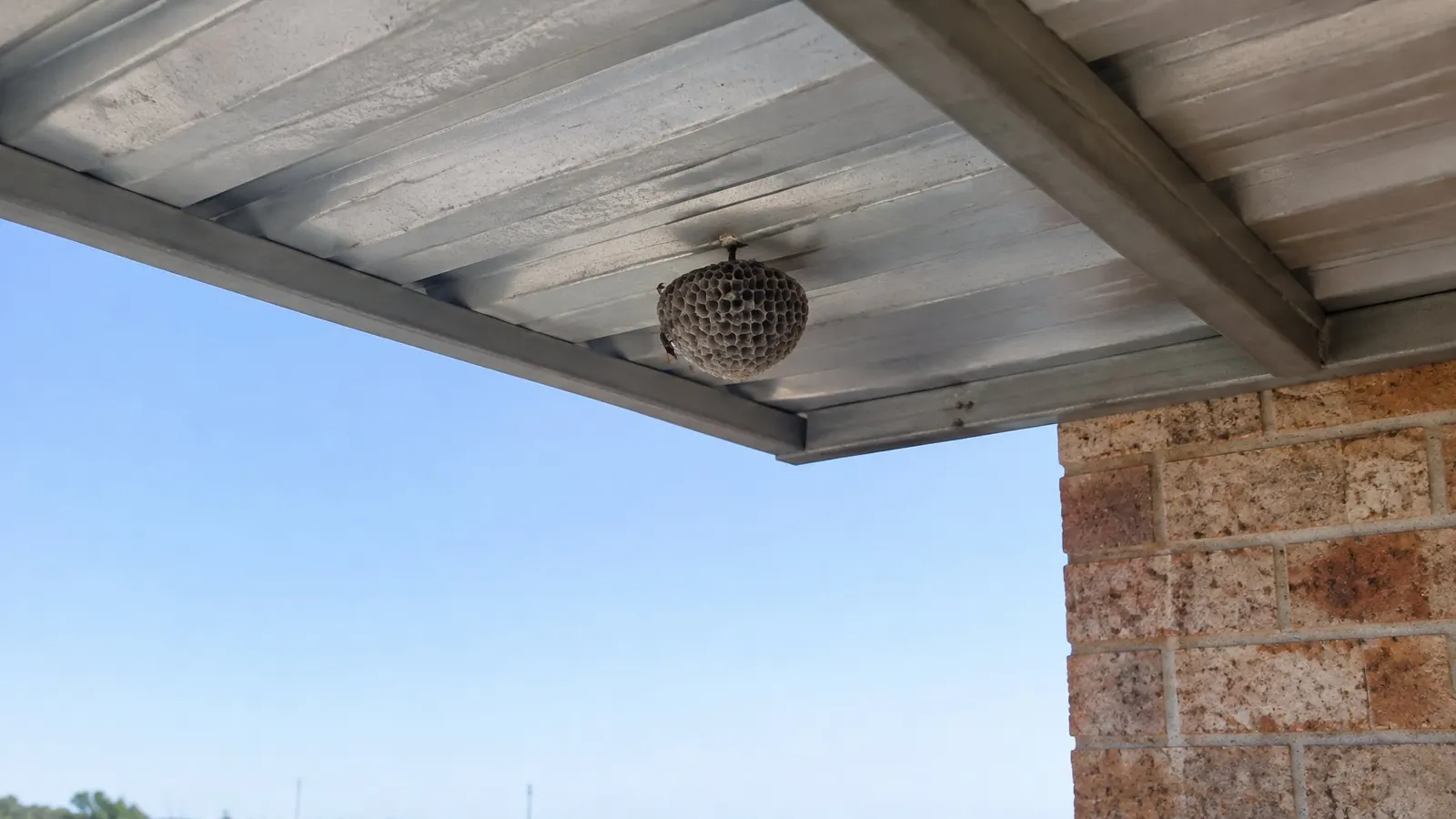
AgriLife's wasp guide separates them by nest. Paper wasps are 3/4 to 1 inch and reddish orange to dark brown. They build one open, downward-facing comb on a single stalk, most often under eaves but also in attics, garages and sheds.
Yellow jackets build a nest fully wrapped in paper with one entrance hole, usually in the ground, sometimes in a wall void, a shed or under an eave. Baldfaced hornets are a type of yellow jacket and also make an enclosed aerial nest.
Why they show up here
Carports, metal sheds, porch ceilings and pump houses all give wasps what they look for: shelter close to food and water. AgriLife says paper wasps build a new nest each year, often in the same general spot as the last one. If one turned up under the carport last summer, check there again in spring.
In a dry climate, a dripping faucet, a swimming pool or a stock tank can draw them to the yard as well. Yellow jackets also come to open food and garbage, so outdoor trash cans and pet food matter.
What a visit usually involves
This describes common practice. The company you speak with decides the details.
The company will want the nest location and type, since open combs and enclosed nests are handled differently. Nests in walls and in the ground take more care, as the entrance is one small hole and the colony can be large. Ask what time of day they prefer to do it and whether the nest gets removed afterwards.
Wasps defend a disturbed nest, and rarely sting away from it unless trapped. So until the visit, keep people and pets clear of the area, and don't plug a hole in the ground or a wall.
Keeping them out
- Check eaves and carport beams in early spring, when nests are small.
- Keep lids on outdoor trash cans.
- Fix outdoor drips.
- Seal gaps in soffits and siding before spring.
When to call
Call if a nest is close to a door, a walkway or play area, or inside a wall. If someone stung has trouble breathing or swelling away from the sting, call 911. AgriLife says a serious reaction typically starts within 20 to 30 minutes.
Common questions
Do I have to treat a nest that's far from the house?
Not always. AgriLife notes that most wasps are beneficial, and solitary wasps rarely sting. A nest nobody goes near can sometimes be left alone.
The insects are fuzzy and carry pollen. Is that a wasp?
It may be something else. Check what this number covers before you call.
Got pests in the house right now?
Call and say what you've seen and your ZIP code. You'll be connected with an independent pest control company. Allow a few minutes for the conversation.
Calls answered: Early morning to late evening