Referral line for Midland, Texas
Termite control in Midland, Texas
Mud tubes on the slab, or winged insects at a window? Termites work slowly, so you have time to do this properly. A call connects you with an independent company that can inspect the house.
Calls answered: Early morning to late evening
| Looks like | Pale workers you rarely see. Swarmers are dark brown to blackish, about 3/8 inch, with a thick waist. |
|---|---|
| Usually found | Hollow mud tubes running up from the soil, damaged wood, shed wings near windows. |
| Season | Swarms can happen all year. In Texas they are most common from February to May. |
| Call when | You see tubes or indoor swarmers, or you are buying a house and need a report. |
How to recognize termites
Texas A&M AgriLife calls swarmers indoors a reliable signal of infestation. They are about 3/8 inch long and dark, and they drop their wings soon after flying. A termite has no pinched waist and its four wings are the same length. A winged ant has a narrow waist and longer front wings.
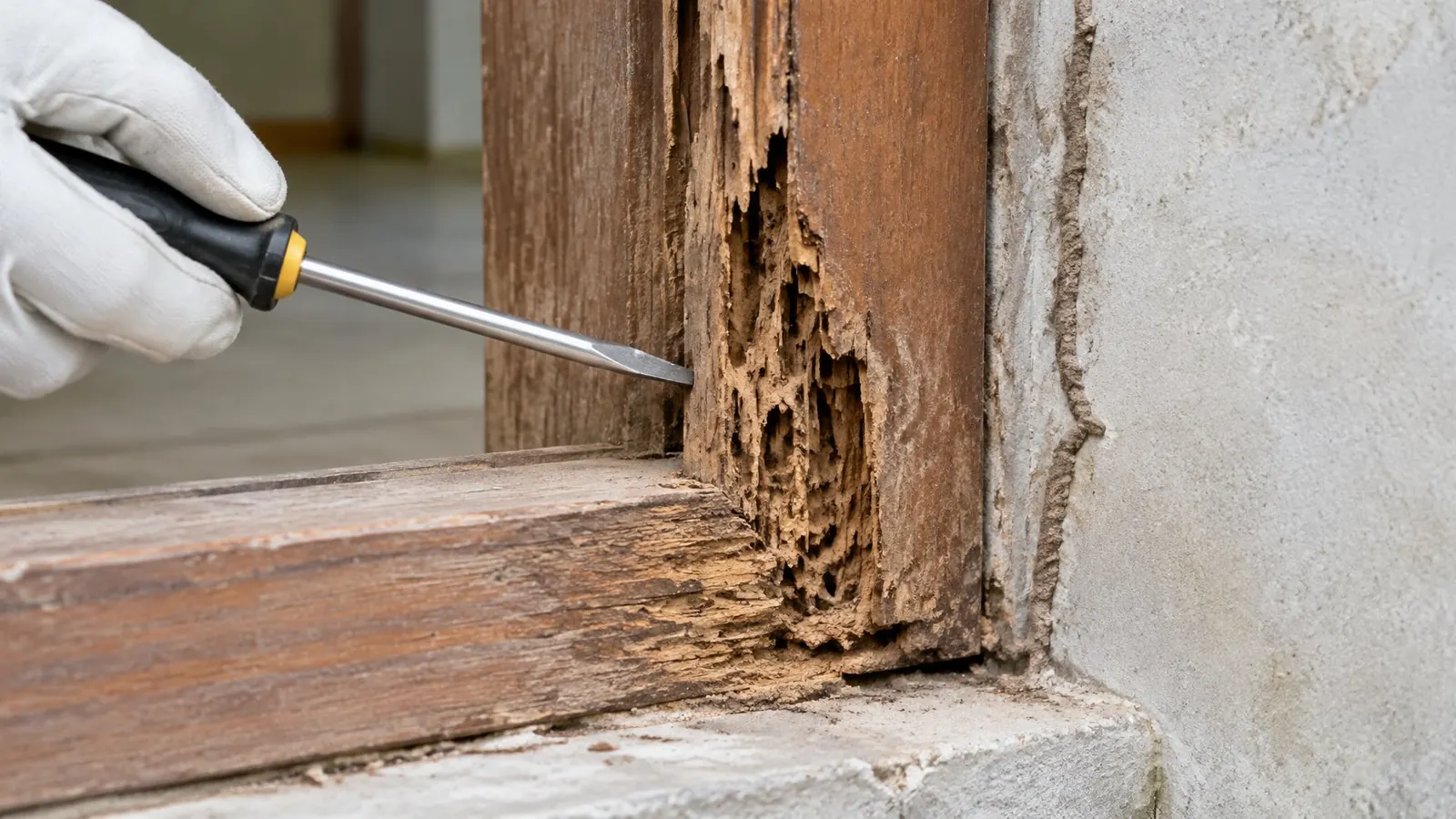
The other sign is a shelter tube: a hollow soil tunnel from the ground up to the house. The Texas Department of Agriculture also lists weak or broken framing, blistered wood and soil in cracks. If you find a tube, leave part of it in place so the inspector can see it. Save a few swarmers in a plastic bag too.
Why they show up here
AgriLife says the eastern subterranean termite is the species most often found in Texas. Drywood termites are mainly a problem along the Gulf coast and in the southern parts of the state, a long way from here.
Midland, Texas averages about 13.5 inches of rain a year, and that dry ground is one reason damp spots around a house matter. The state's list of conditions termites like includes wood touching soil, firewood stacked against the foundation, wood mulch within 3 feet of it, and poor grading. A leaking hose bib or a flower bed watered against the slab gives them a reason to stay.
What a visit usually involves
This describes common practice. The company you speak with decides the details.
A licensed person looks for visible evidence in the places that can be reached. Nothing gets torn apart, so hidden areas stay unchecked. Treatment is usually a liquid applied to the soil under and around the house, or bait stations that are monitored over time.
Texas requires the company to give you disclosure documents when it bids: a diagram of the structure, the label of the product, details of any warranty, definitions of the treatment types and the signature of a person licensed in the termite category. Read them. AgriLife says to take your time and compare more than one company, since a few weeks' delay rarely changes anything.
Keeping them out
- Keep firewood, scrap lumber and soil away from the foundation.
- Pull wood mulch back from the slab.
- Fix leaks and drips near the walls.
- Keep the slab edge visible so that tubes are easy to spot.
When to call
Call if you've found mud tubes, swarmers indoors or soft wood. Termites in a fence or woodpile don't always mean the house needs treatment, but they do mean an inspection is worth having.
Common questions
How urgent is a termite problem?
Less urgent than it feels. AgriLife's advice is not to panic or be rushed. The exception is a home sale with a closing date.
Can you tell me if a house has termites without an inspection?
No. This line connects you with an independent company, and an inspector from that company is the person who can answer that.
Got pests in the house right now?
Call and say what you've seen and your ZIP code. You'll be connected with an independent pest control company. Allow a few minutes for the conversation.
Calls answered: Early morning to late evening